Payment Infrastructure Innovations Reshaping Incentive Structures Across Wireless Gaming Platforms
Written by Viktor Perry · Nov 13, 2026
Payment Infrastructure Innovations Reshaping Incentive Structures Across Wireless Gaming Platforms
Wireless gaming platforms have integrated new payment infrastructures that connect directly to incentive mechanisms, allowing operators to adjust rewards based on transaction speed and data accuracy. Research from the Federal Reserve indicates that real-time payment networks processed over 2.4 billion transactions in the third quarter of 2026, with a growing share routed through mobile entertainment applications. These systems replace batch processing with instant verification, which means loyalty points and bonus eligibility update without the traditional delays that once separated deposits from reward calculations.
Core Technologies Driving Change
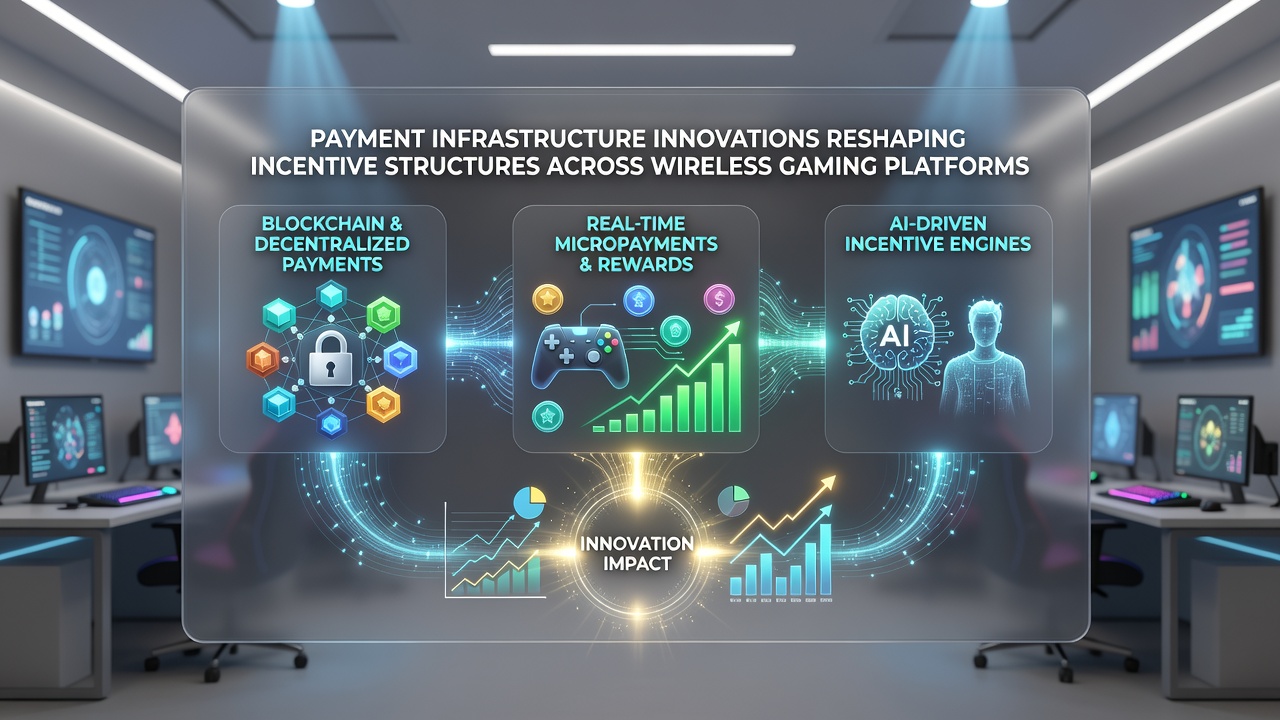
Developers now deploy API layers that link digital wallets, bank rails, and blockchain ledgers to backend player management systems. Data from the European Gaming and Betting Association shows that platforms using these APIs recorded a 47 percent increase in same-day reward redemptions between January and October 2026. The architecture supports tiered incentives that scale automatically when deposit frequency or volume meets predefined thresholds, eliminating manual reviews that previously slowed progression through loyalty levels. Observers note that this automation reduces administrative overhead while maintaining compliance logs required by state regulators.
Real-Time Settlement and Reward Timing
Instant settlement rails allow operators to credit bonuses within seconds rather than hours. One study released by the University of Nevada, Las Vegas gaming research center found that players on platforms with sub-second confirmation saw a 31 percent higher retention rate after the first week compared with those using overnight processing. Because incentive structures now tie directly to verified balances, operators can offer time-limited multipliers that activate immediately upon deposit, a feature that has become common across North American and Australian mobile markets during 2026.
Payment tokenization further refines these structures by securing card and account details while transmitting only anonymized transaction metadata to analytics engines. This separation lets platforms personalize offers without storing sensitive financial information on gaming servers. Figures from the Canadian Gaming Association reveal that token-enabled systems handled 68 percent of mobile deposits in regulated markets by November 2026, supporting more granular segmentation of incentive tiers based on spending velocity rather than total lifetime value alone.
Impact on Tiered Loyalty Programs
Traditional loyalty programs relied on periodic batch uploads to determine tier status. New infrastructures feed continuous data streams that recalculate player standing after each completed transaction. Researchers at the University of Sydney documented how one regional operator shifted from monthly to hourly tier evaluations, resulting in a 22 percent rise in mid-tier conversions within four months. The change stems from the ability to confirm deposits instantly and apply corresponding reward multipliers without waiting for reconciliation cycles.
Cross-border payment corridors have also expanded, allowing operators to serve international players while maintaining local compliance. Stablecoin rails, for instance, now interface with fiat on-ramps in several jurisdictions, shortening settlement times from days to minutes. According to data compiled by the Asia-Pacific Gaming Council, platforms that adopted these corridors recorded measurable increases in repeat deposits from previously underserved regions during the first three quarters of 2026.
Security and Compliance Integration
Modern payment stacks embed compliance checks at the transaction layer, flagging patterns that could affect incentive eligibility before rewards are issued. This proactive filtering helps operators avoid distributing bonuses tied to sanctioned or high-risk accounts. The approach aligns with requirements from multiple regulatory bodies, including those overseeing operations in the United States, Canada, and parts of Europe, where audit trails must capture both payment and reward events in a single record.
Wireless platforms continue to test biometric authentication linked to payment authorization, which further accelerates the path from deposit to bonus activation. Early deployments show reduced friction for returning players whose devices already store verified credentials. Industry reports indicate that such methods cut average onboarding time for repeat deposits by nearly 40 percent compared with traditional password-plus-OTP flows.
Conclusion
Payment infrastructure upgrades have become central to how wireless gaming platforms structure and deliver incentives. Real-time rails, tokenization, and integrated compliance layers enable operators to offer dynamic rewards that reflect verified activity without historical delays. As these systems scale through the final months of 2026, the connection between transaction infrastructure and incentive design grows tighter, shaping player progression across mobile environments in measurable ways.